
Terrill Welch by herself - issue #45 A Life of Endless Effort
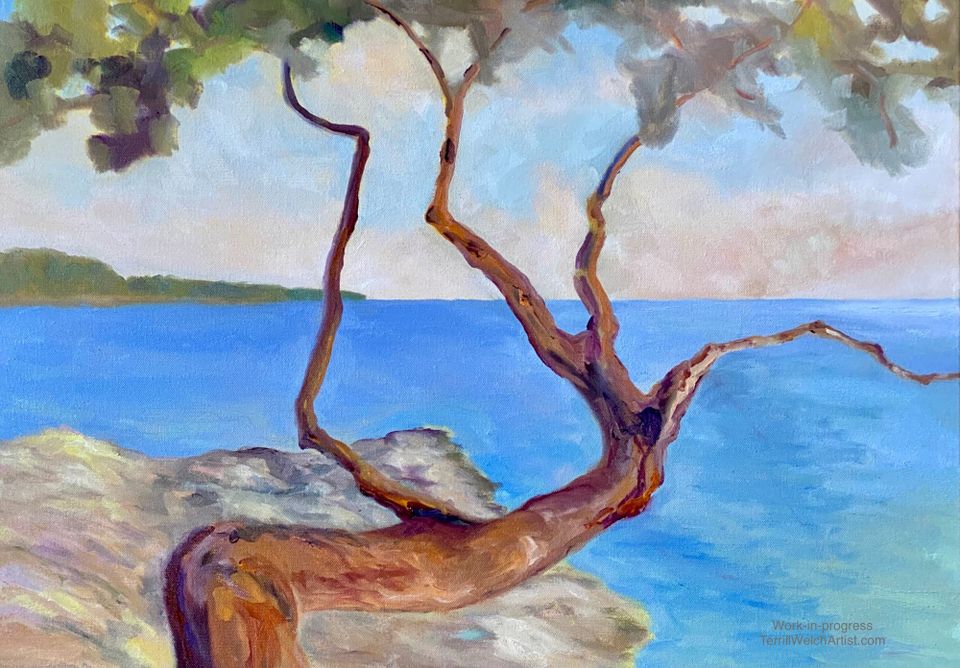
Summer mornings are cooled from overnight drops in temperature and filled with the scent of fresh cut hay mixed with the fragrance of the forest. We are nibbling our last bowl of organic cherries from the Okanagan. I picked up a bouquet of dahlias from the Hardscrabble farmstand when we were out doing the recycling. As I laid the flowers on the counter, cherries and dahlias seemed to belong together.
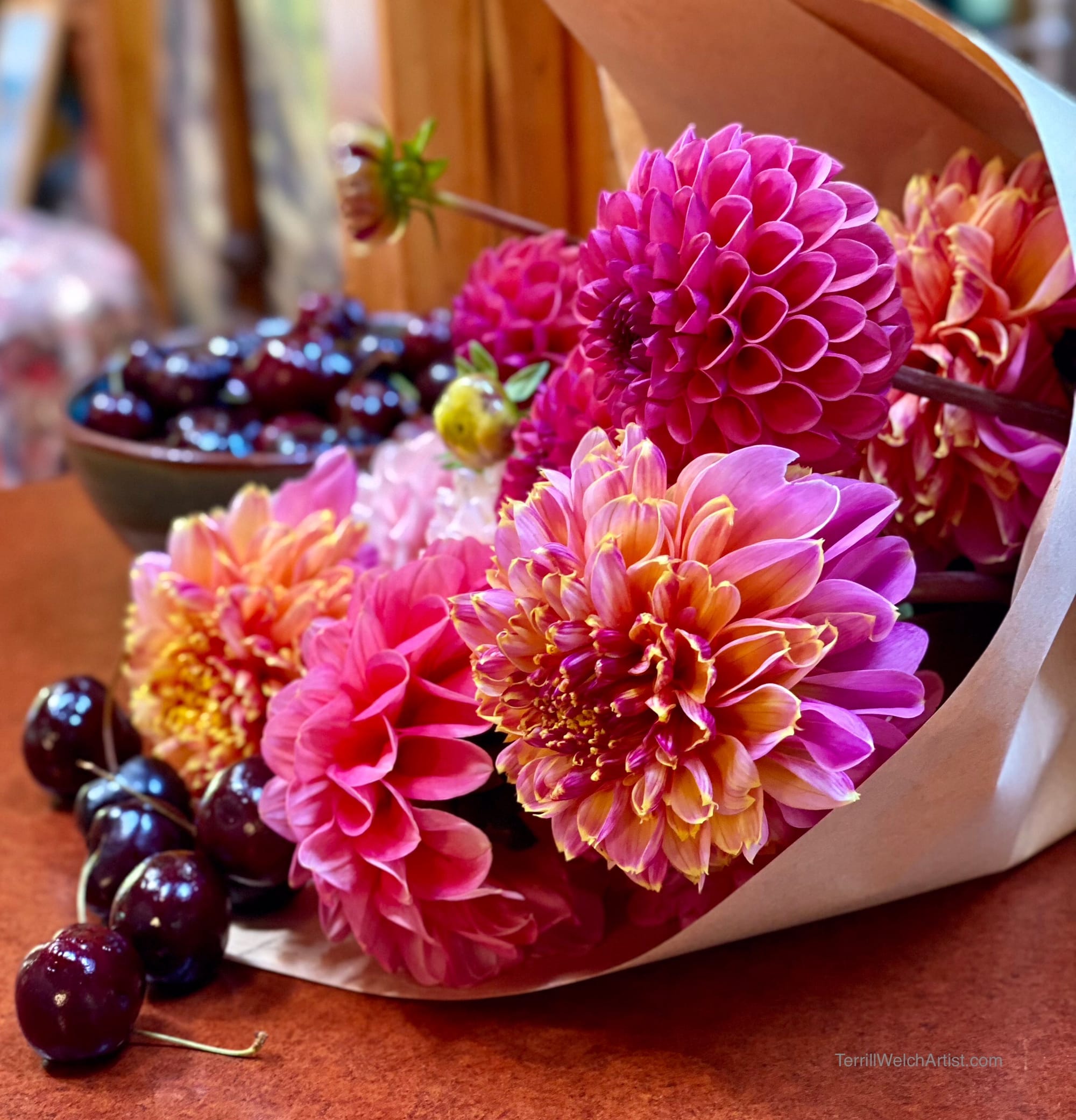
I ate the spilled cherries and tossed the flowers in a glass jar to sit on the table.
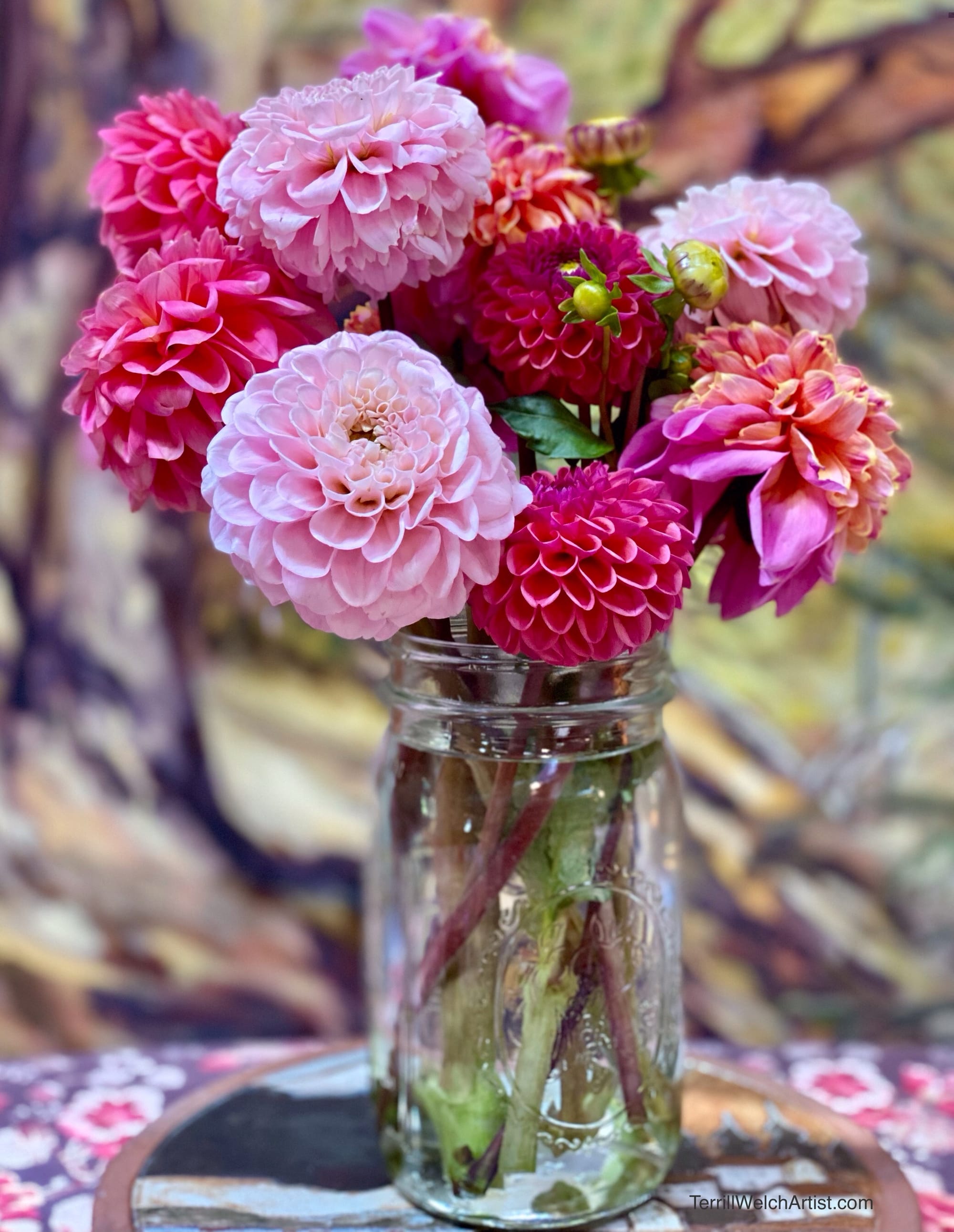
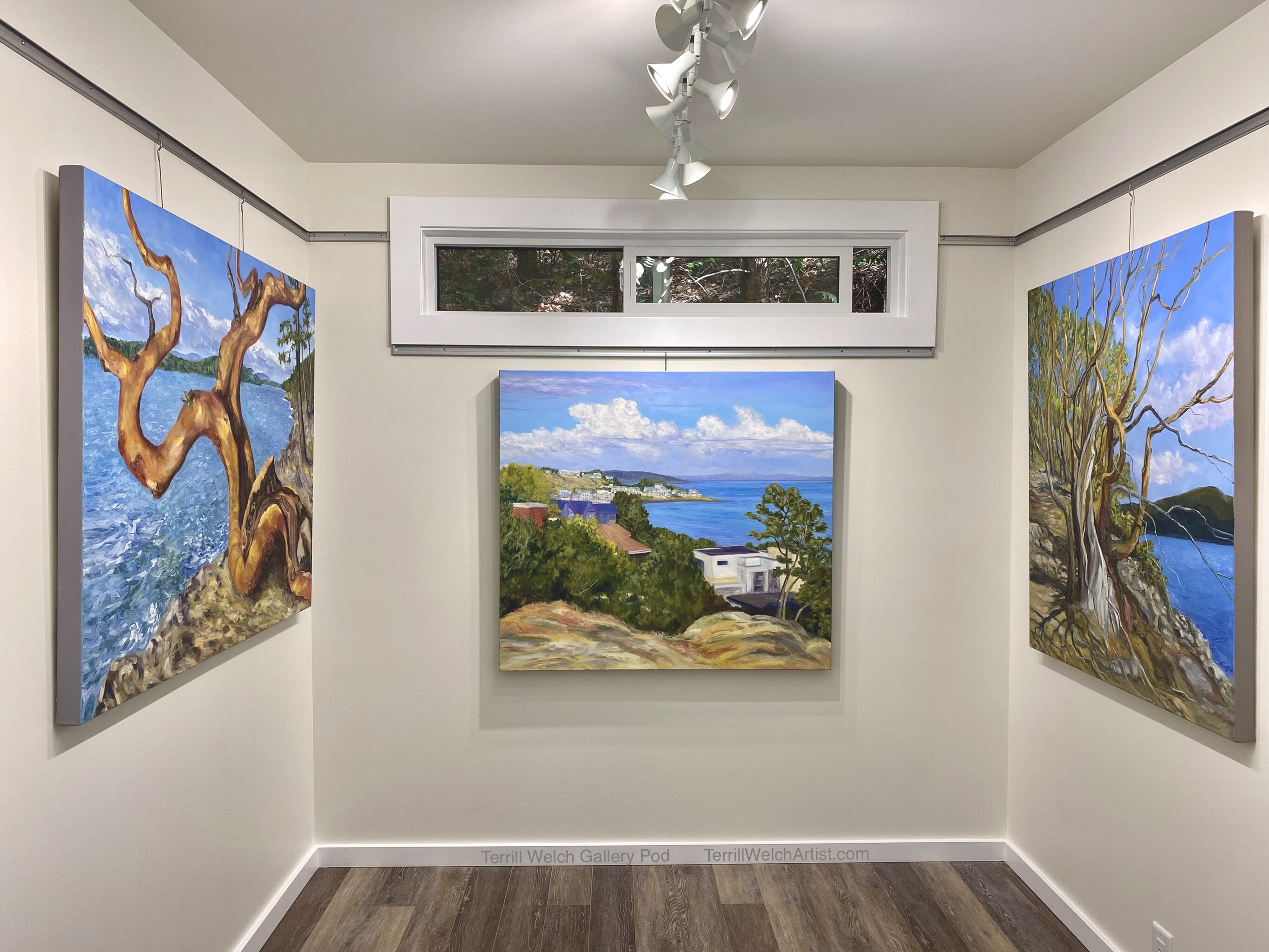
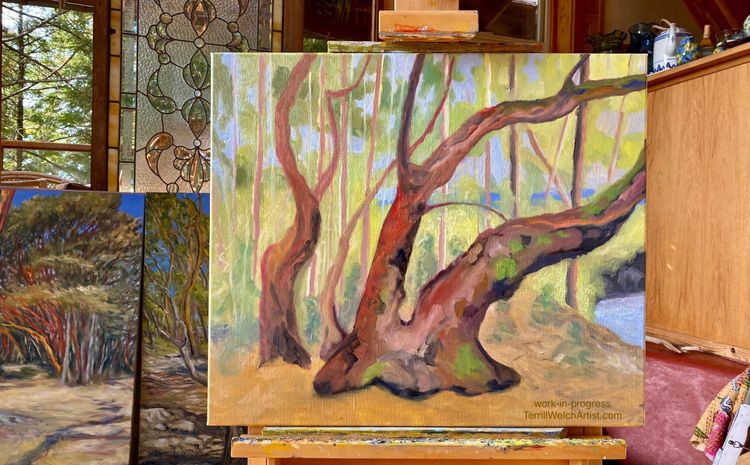
I won’t be painting this luscious bunch of colour as I am working on a good-sized painting of an arbutus tree in the early morning light. However, my past Hardscrabble bouquets are still available and can be considered in this ‘Summer of Flowers series’ collection in the online gallery at:
https://www.artworkarchive.com/profile/terrill-welch/collection/summer-of-flowers-series
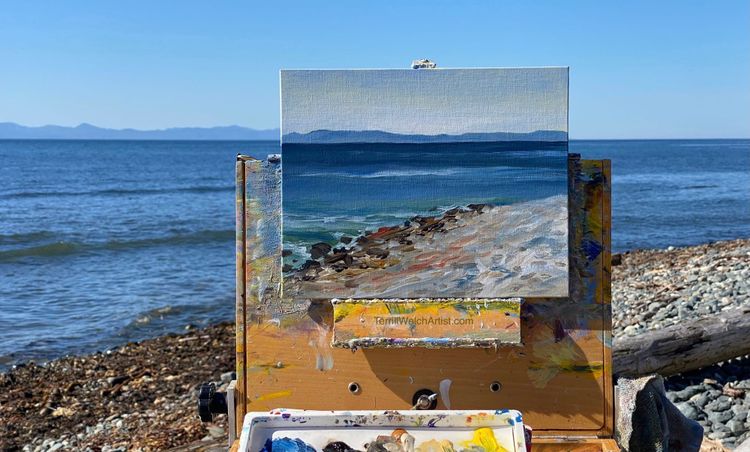
WHAT IS ON MY EASEL
The afternoon is warm and the painting I am working on is tacky dry and must set up further before I can continue.
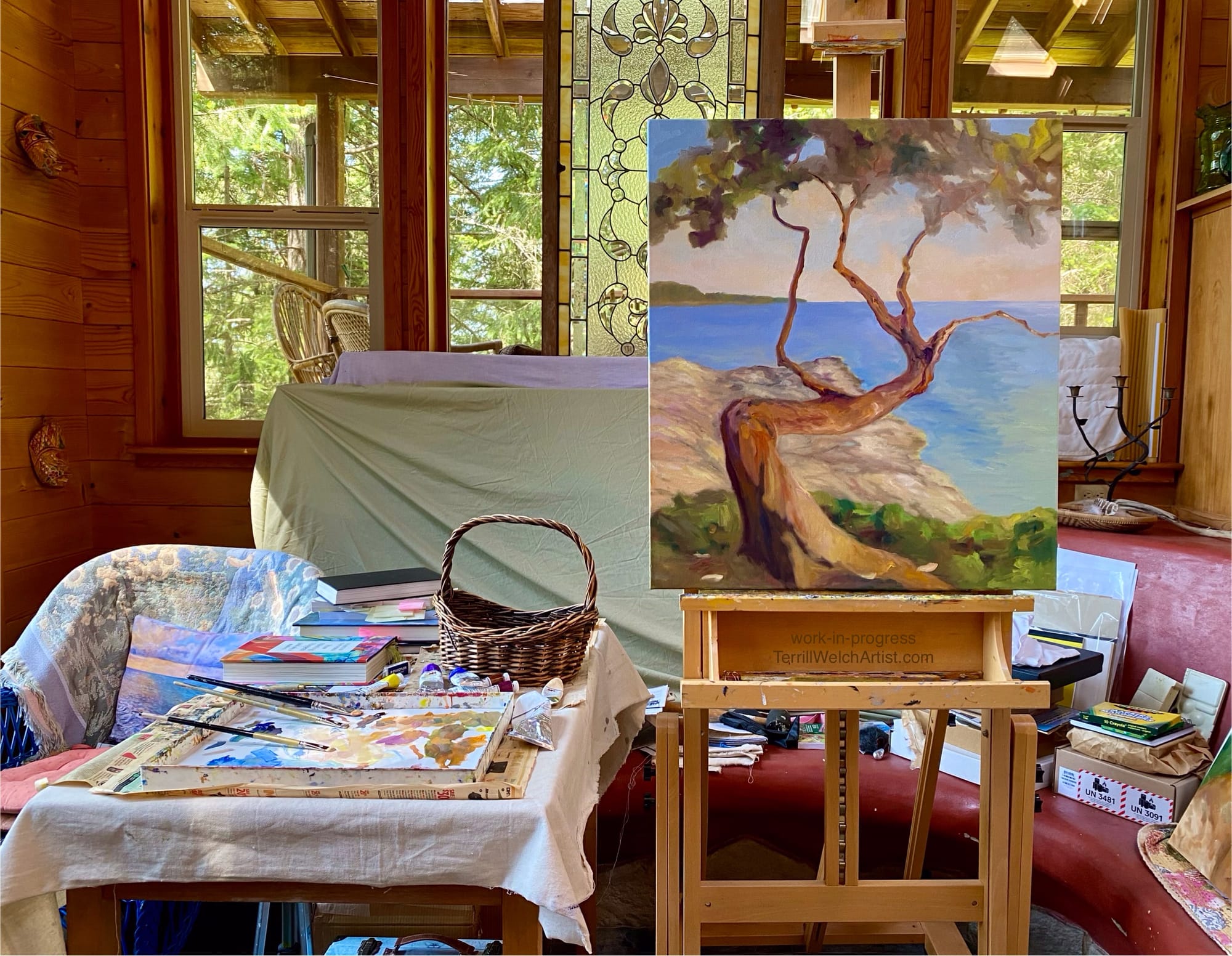
I wash my brushes and know there will be time to sit and read since I have already made the homemade broth for cream of chicken vegetable soup for supper.
WHAT I AM READING
I make a cup of tea, grab a handful of pecans and a couple of slices of Cathedral City English Cheddar, and pick up How Painting Happens (and why it matters) by Martin Gayford. The book is possibly only riveting to a painter but that said, I have a hard time putting it down. Gayford does something that every art historian and art critic should do and that is put the life span dates of the artist he is interviewing and the date of the interview and all the dates of the referenced artwork in his text. What a pleasure! His conversations with painters covers over three decades and the book is not written linearly but rather by developing ideas, discussion and reflection on the process of painting.
Being a painter, Gayford concedes, is often to make a “commitment to a life of endless effort”. Maggie Hambling (b. 1945) once said to Cecily Brown (b. 1969) “that if she wanted to be a painter, she would need to be ready to work all the time” (Gayford, 2024, p. 50). William de Kooning (1904-97) once told Wayne Thiebaud (1920-2021) that “you’ve got to find something you love and try to deal with it — and not expect anything” (Gayford, 2024, p. 45). From archaeological digs and research, we know that humans have been painting for at least 45,000 years. With this in mind and recognizing that “painting is a language of sorts”, Gayford begins his introduction with the conclusion — “rather than constantly evolving towards some future state, painting in all its crucial aspects remains exactly the same as it ever was” (Gayford, 2024, pp. 15-18).
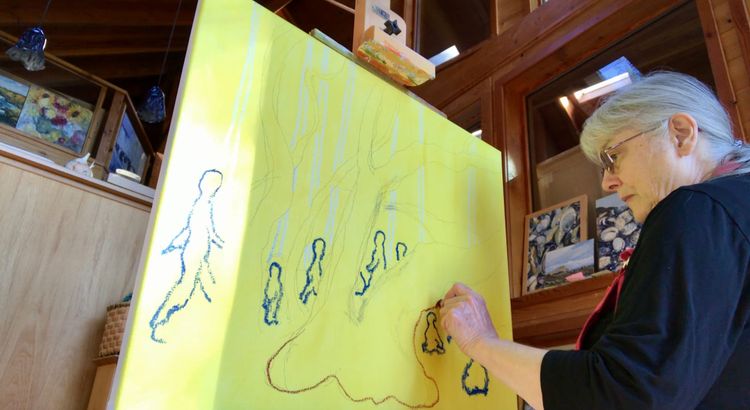
So here I am, trying to decide if I am simply continuing an endless effort or, in the words of Frank Auerbach (1931-2024) is some “true and new thing” (Gayford, 2024, p. 39) emerging that I am trying to deal with at the easel during this mid summer opportunity for reflection? There is only one thing to do. Keep painting. Keep thinking about painting. Keep talking about painting. Keep writing about painting… and of course, keep dreaming about painting — and expect nothing. Begin anew with each brushstroke, each breath, each step into the endless unknown that is one’s painting practice.
Catch up with you again next Friday!
Terrill
Reference list:
Gayford, M. (2024). How Painting Happens. Thames and Hudson Ltd.
Member discussion