Terrill Welch by herself - issue #42 Tumbling in the Tides
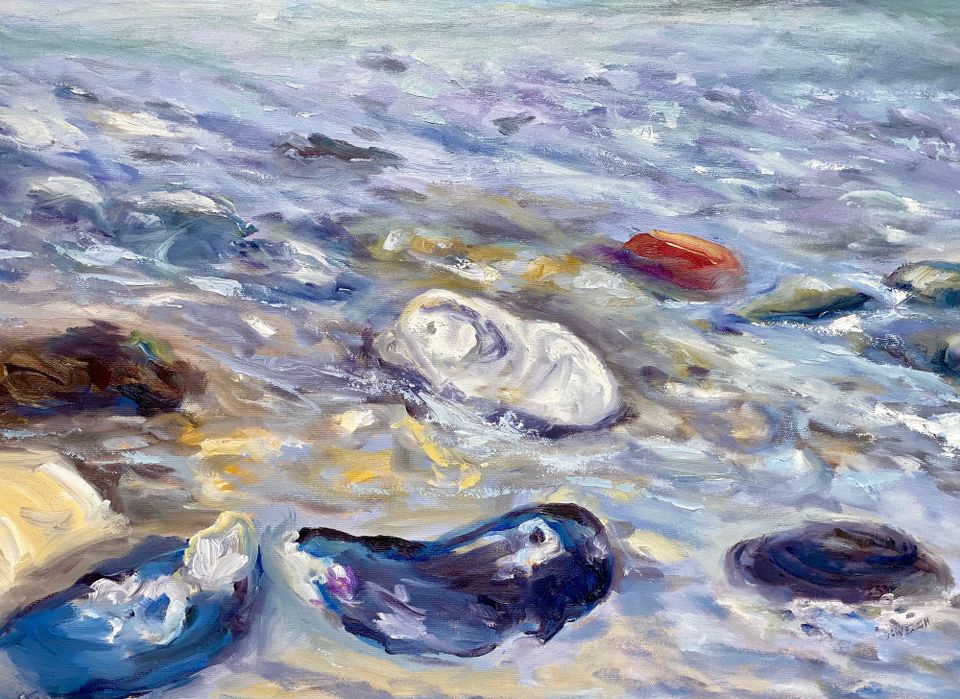
Change can be slow and go almost unnoticed. At other times, it vigorously tumbles and break bits away as it reorganizes everything within its path. What change teaches me is to release attachments with grace before gazing around to see what is available and what is possible to navigate a path forward. Infinite impermanence is a condition of our existence. We can choose how we respond but the condition of change will remain and influence each second of our living experience. I was reminded of this as I painted ‘Early Morning Seafloor’. I was reminded of this when I was pulling out recent seafloor works and past seascape paintings for an art curator who came from Victoria to select paintings to consider for a pop-up exhibition she is curating for World Ocean Day on June 13, 2026. I was reminded of this as art collectors selected paintings to purchase and others made special arrangements for opportunities later in the season that will better match their availability to come see work in person and discuss commission options. I was reminded of this when individuals in my home and school support structure announced they are leaving within days of each other. I first critically evaluate what is still in place and my own capacity to step up and then I tumble on, picking up what I need as I go. It is a matter of taking a breath and then relaxing, assessing, and then rolling; taking another breath and then relaxing, assessing, and again rolling… repeat often and for as long as necessary. It is only when we brace ourselves and become stiff with resistance that we are at risk physical and emotional of breaking beyond our ability to function. At least, this is what I tell myself as I search the immediate horizon for the finish line for my MA in Fine Art degree with only 2.5 months left until all work must be handed in for assessment. Our cohort is planning a graduate group show to open on Thursday, 20 August 2026 as a celebration! I shall keep us posted as we get nearer to the date. This issue will also share a new painting, what has sold and a link to recently my released paintings. Enjoy!
EARLY MORNING SEAFLOOR DATA COLLECTION
Wednesday, 6 May 2026
Figurative/Abstract Self Assessment Band-Scale Rating between 1-10 with 5 being Impressionism (Modern or Contemporary): 7-10
In assessing this painting, I am reminded of Alex Katz’s directness, Lois Dodd’s intimacy of shape and observation and Etel Adnan’s ability to interpret and reimagine her subject. There is no one detail in ‘Early Morning Seafloor’ that speaks to this but rather it is a full immersion into the painting as a whole.
Reference Gathering:
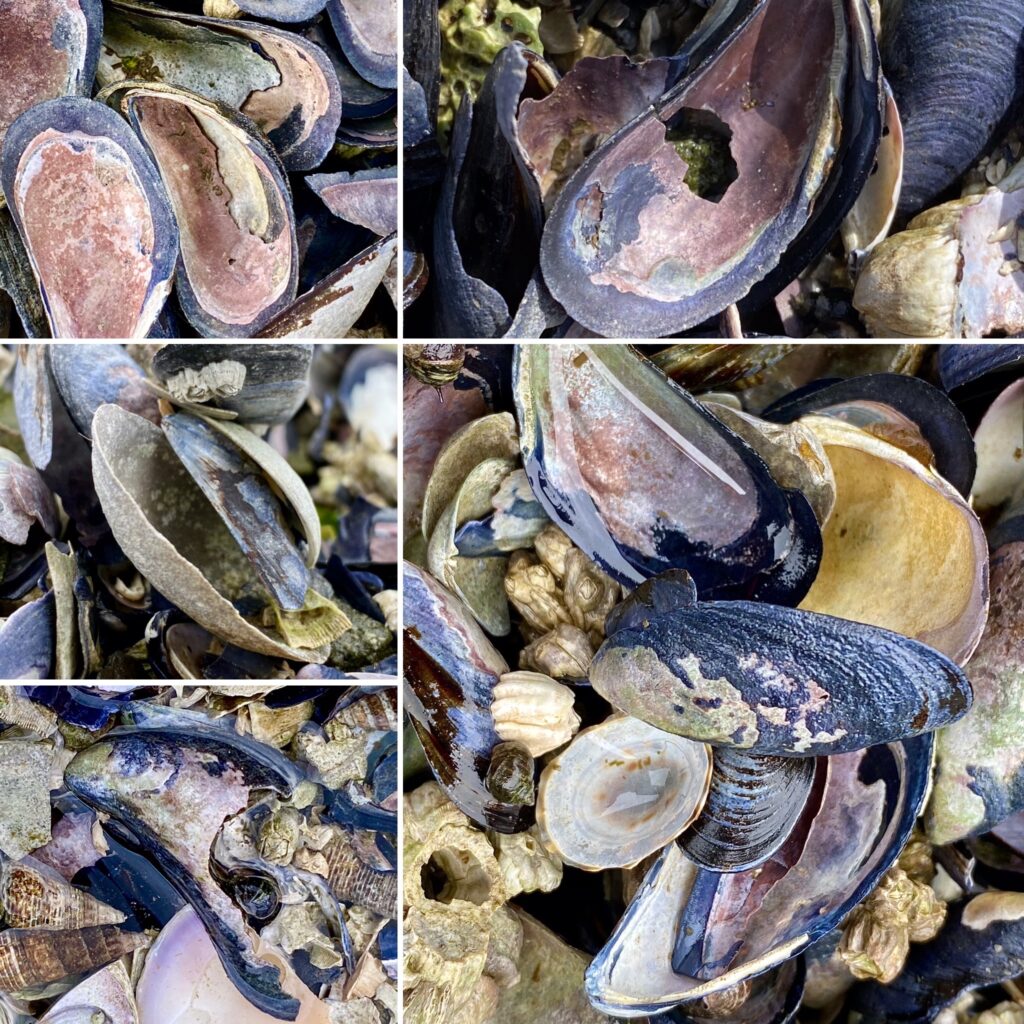
The reference gathering for this painting the previous month in mid March and though the work rests on one primary reference experience and image it comes out of a body of material and I find it important to take this more holistic view as is captured in this image collage using the Layout App.
Making Process:
There are only a few process images for this painting. However, I do have these notes about the first part of my process:
I am standing at the easel huddled in a worn sweater in the cool room with an old red painting apron snugged tight over top at shortly after 4:00 am. The directed blaze from a full spectrum studio lamp is a poor substitute for natural daylight. However, I have made a commitment to others to work in our respective studios together between England and the southwest coast of Canada. The soft shuffling of others working on their respective projects soon faded and in my mind’s eye I was scrunched down low to the seafloor in the bottom of the reef.
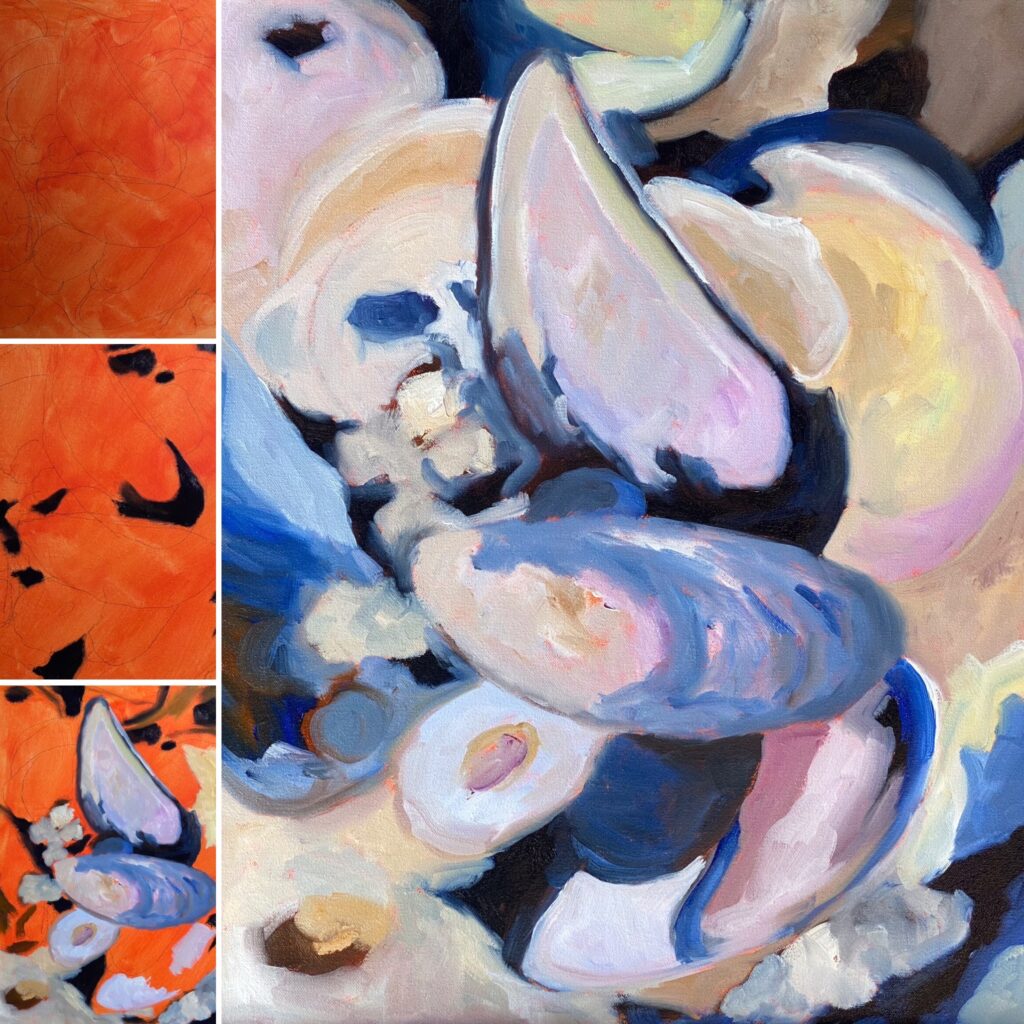
I painted solidly for the whole of the making day painting session on Thursday, 9 April 2026. I managed to bold the painting in so that it was ready for me to continue work on it after it had dried two weeks later on Thursday, April 23, 2026. I had been spending time with the painting as I passed by it or while cooking and doing dishes simply enjoying living with it at this middle stage. In the warm light of the afternoon, this is where I began on the now dry canvas.
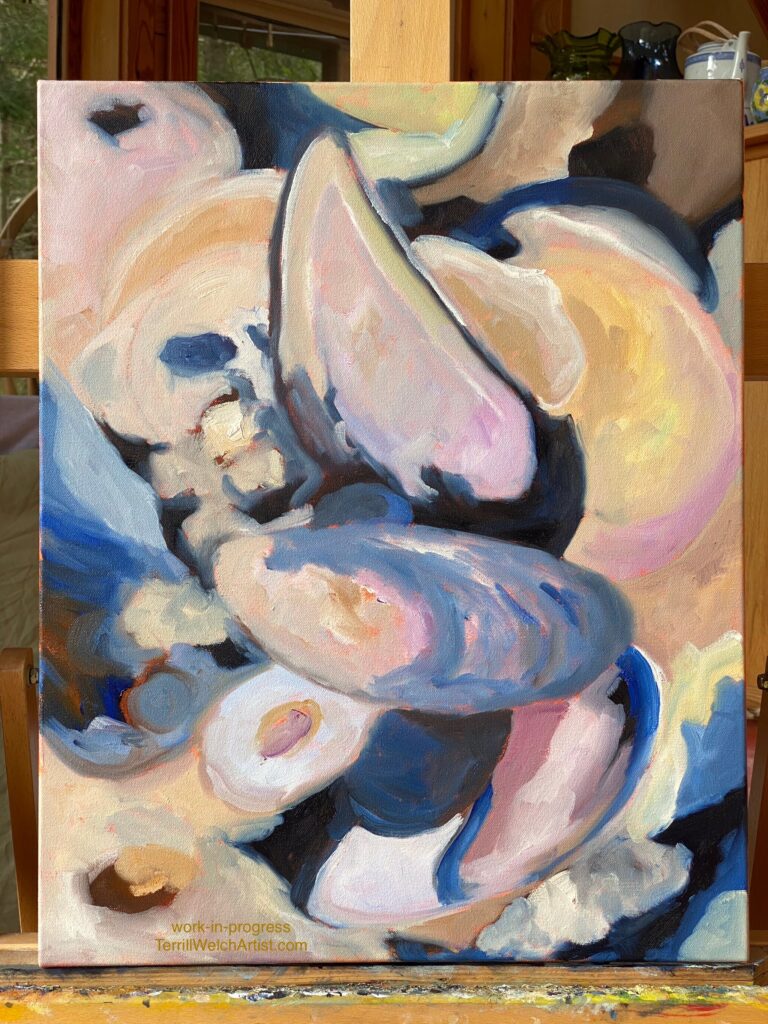
I channeled my best Paul Cézanne and deliberated over each brushstroke. I wanted to add value with each mark and only make as many marks as I felt necessary to capture this sense of early morning on the seafloor that already lay bare on the canvas. There is no record of this thoughtful markmaking. The passage of time was that afternoon and the next morning until shortly after noon. I put the brush down and walked away several times creating breathing space between me and the canvas.
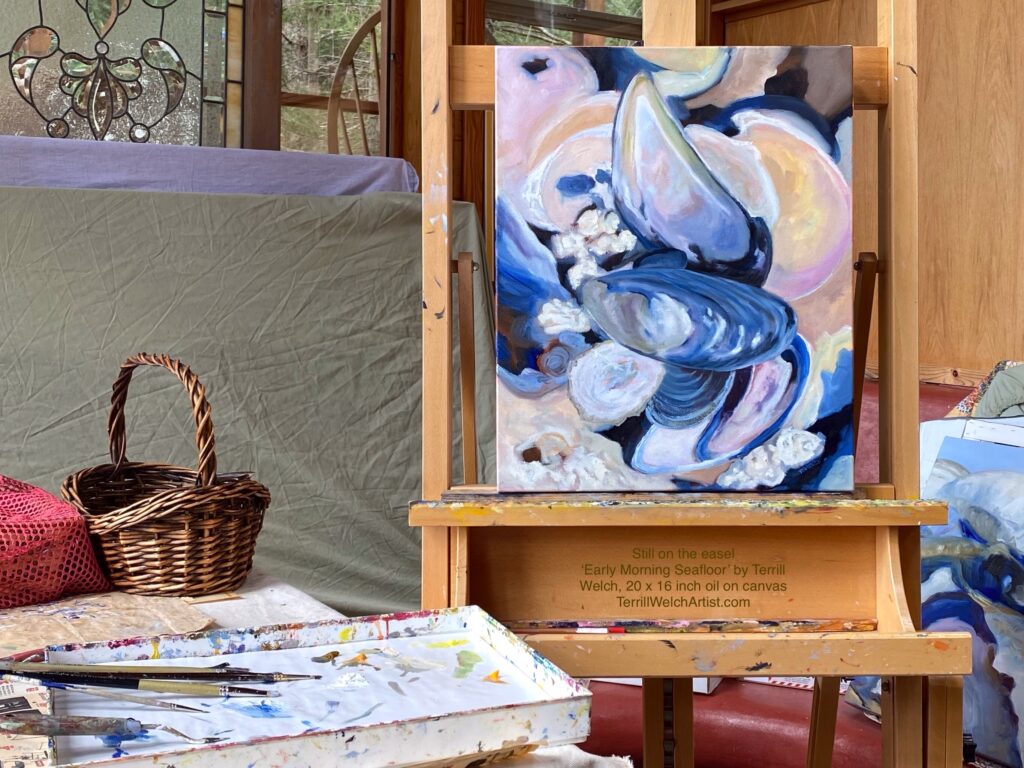
I would like to draw attention to the finished painting on the bottom right that is keeping me company. This will become relevant later on and the conversation is stronger than what one might reasonably expect without the creator having purposeful intent. It is the same size canvas though I didn’t consciously notice at the time.
The painting has kept some of its raw material elements and soft rough edges while holding a quiet intimacy and warmth that matches my experience of being physically along the seashore with a quiet surf.
Finished Painting:
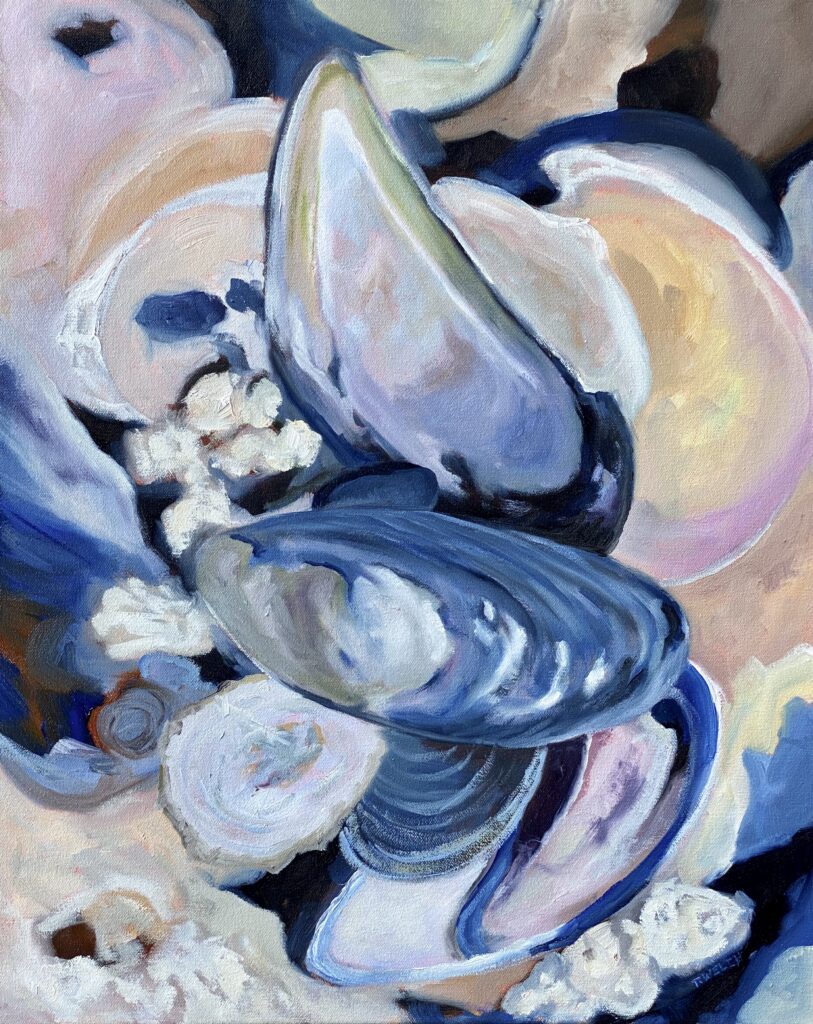
Making Notes:
In my mind’s eye I scrunched down low to the seafloor in the bottom of the reef. We have names for the various seas though the clams, mussels, oysters, limpets, barnacles and snails seem more concerned with temperatures and salt content than actual physical geography. I look closely at a few in the reference I had gathered earlier as my peripheral vision simplifies forms into soft abstract coloured shapes. Days have passed and I am in the studio again and alone. It is midday this time. I transform into an empty shell as I paint. I tumble and toss with the rhythms of the sea while nudging and pushing up against my neighbours. A piece of me breaks away and slips deeper into the seabed. I do not mourn this loss because it is inevitable. None of us or any other thing remains whole for long.
Reparative Reflective Analysis:
During two separate critique discussions and a conversation with an art curator about this painting I was given the opportunity to speak to this work and my process. The art curator had come to the studio from the nearby city of Victoria BC to consider my work for a group exhibition for World Oceans Day in June. She was seeking artwork that represented the oceans from a nature-centric approach. Her vision for the exhibition has five chapters and of the nine works she has flagged for consideration this one was selected for possible inclusion in the final chapter focused on celebrating the ocean and a sense of hope. It may not make it into the final selection as my notes about the painting leave a stronger impression on the continuity of the life cycle. For me this is worth celebrating and does offer hope, if we can navigate our losses. I am not sure this is what she is looking for but we shall see.
I was asked if the length of time it took me to complete the painting worked better for me. My answer was a firm ‘no’ as I find it frustrating working on a dry canvas when I get to the final stages of a painting. That said, with more time to reflect, this longer process between blocking in and finishing did offer me plenty of time to consider various ways to continue and to confirm exactly what I wanted for the painting. The unfinished painting was good company as it was and I didn’t want to lose this experience in the final stage. I am not sure the secret this painting holds would have come about without this length of deliberation. The secret has to do with the painting that was sitting on the bottom right while I was painting at the easel.
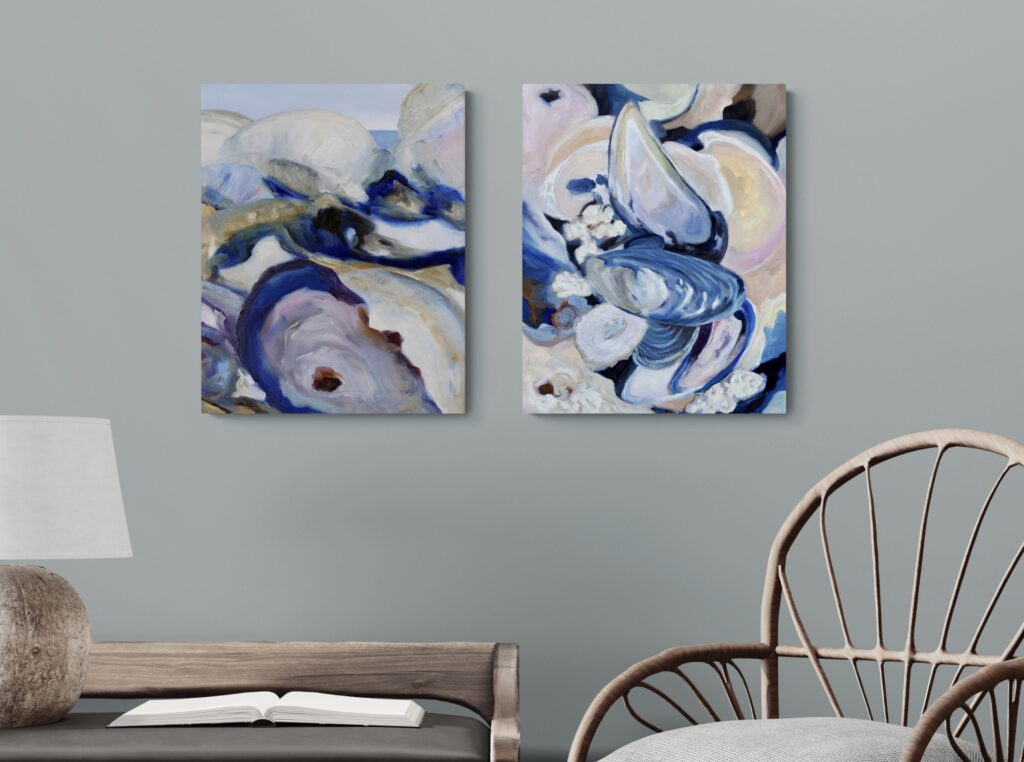
The painting on the right was completed ten months earlier. I had haphazardly placed it on the right of the easel while I was working in ‘Early Morning Seafloor’ during the process of moving paintings around for a show. As is visible above, outside of my awareness, these two paintings were having a continuous conversation both in composition and colour connections. Even though the scale of shapes between the two is different and the horizon line has disappeared in the ‘child’s view’ composition of the second painting, in my mind, there is no doubt that they are related.
Situated Knowledge and Discourse Reflexive Analysis:
I have been considering post-modernism, material deconstruction and reconstruction in relation to art theory and my painting practice. A question asked to me during a recent critique session (where I presented this painting) about how it felt to have a recognizable style, and to work within such a tradition, has brought me back to this musing. My immediate answer to this question was that regardless of the approach and methods, I was still me and my primary relationship to nature and my painting practice has remained the same.
This deep connection to nature and my ongoing study and research has allowed me to develop a personal painting language to interpret what I experience as a conversation in paint with my natural environment. My relationship to nature and this conversation is primary and takes precedence over any of my art history and contemporary practice concerns or consideration. This reparative nature-centric relationship with nature is why I paint what I do. I am passionate about these nature/painter conversations and the language that has developed during these engagements over the past 50 years. Communicating through my painting language sings to my bones and balances my wellbeing.
This personal painting language competency is a strength when I have something I want to convey through my conversations with nature. It has taken me years of practice to become a fluid communicator using these materials, methods and ideas. The notion that I might become bored seems peculiar to me. It would be like asking me if I ever get tired of thinking or speaking in my native tongue? The answer is - no. The opportunity to discover theoretical ideas that come out of my painting research and practice feels limitless. Barbara Bolt refers to this as her approach to ‘material thinking’ and that our quest for something new is ‘realized through our dealings with the tools and materials of production and our handling of ideas’ (Barrett and Bolt 2014, pp. 60-61). In this I reluctantly conceded that my experiential conversations with nature are my ‘handling of ideas’ even though it doesn’t feel like an idea at the time. Scientifically, the exchange of tiny molecules and bits within the environment with my physical body provides something more concrete than a thought/imaging/idea but this is the theoretical sense-making that accompanies the actual experiences of being and working with my chosen paint materials.
Key Findings:
When I prepared the data collection notes for the previous painting ‘Shifting Shapes in the Tides’ I mentioned evaluating my data collection process to see how it was working or not working and what I might want to do differently. I still might make changes but for now this system works well for me and will continue to document my material thinking with each artwork.
Anything else:
Not at this time.
Reference list:
Barrett, E. and Bolt, B. (2014). Practice as Research: Approaches to Creative Arts Enquiry. Kindle ed. New York: I.B. Tauris.
WHAT HAS SOLD
Firstly, I want to thank everyone who shared and made inquiries about ‘collect Terrill Welch paintings like it is 2019’ during the brief window of this opportunity. These painting sales are a direct result of this promotion and include new and established art collectors of my work from Canada and the United States (who will come to the studio to pick up the work). I am always appreciative when paintings find new homes and I am extra appreciative during these challenging times. Thank you to all of you who participated by sharing, viewing, inquiring and purchasing new paintings for your art collections!
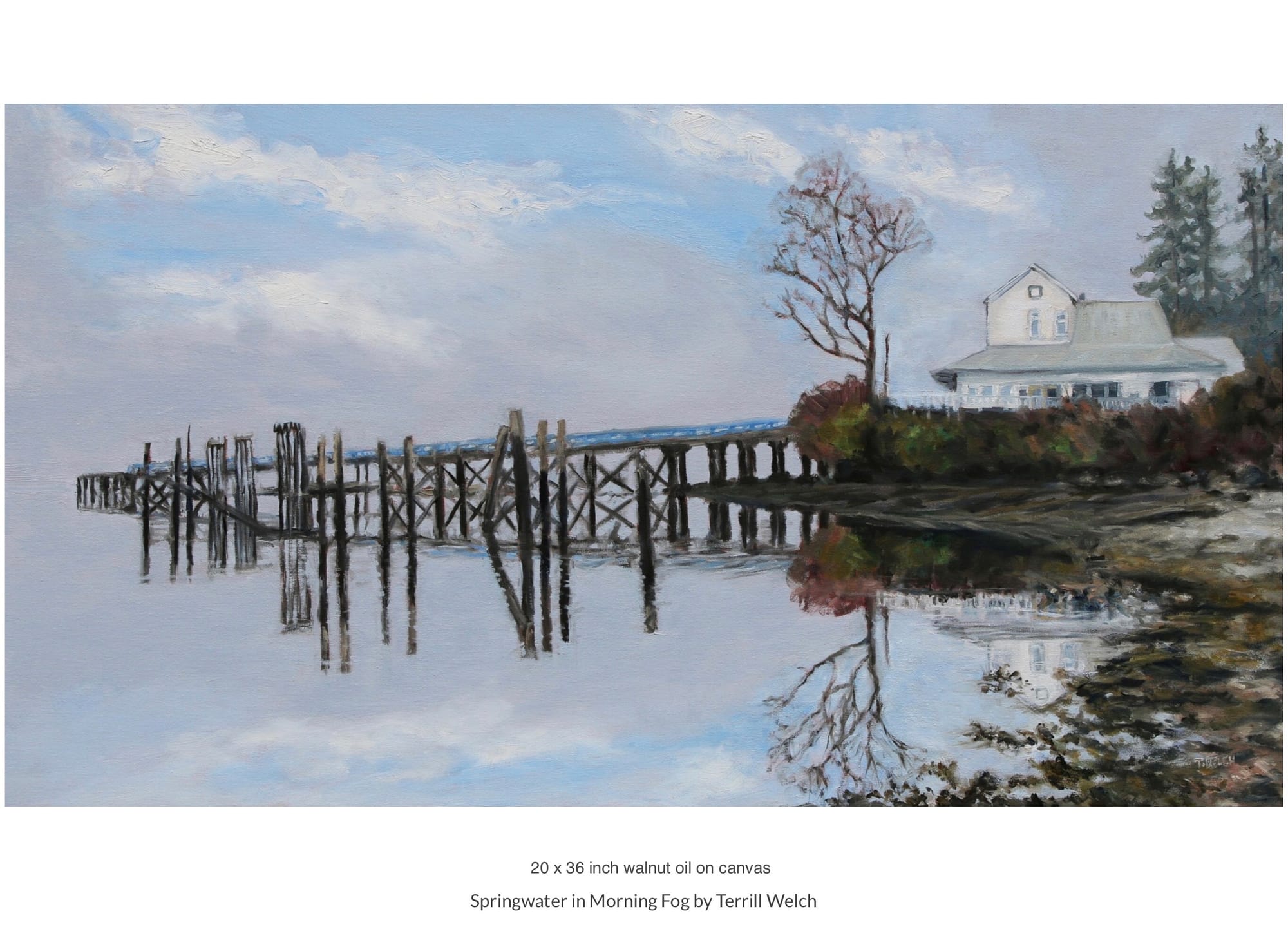
Sold! ‘Springwater in Morning Fog’ a 20 x 36 inch oil and canvas is off to its new Mayne Island home already.
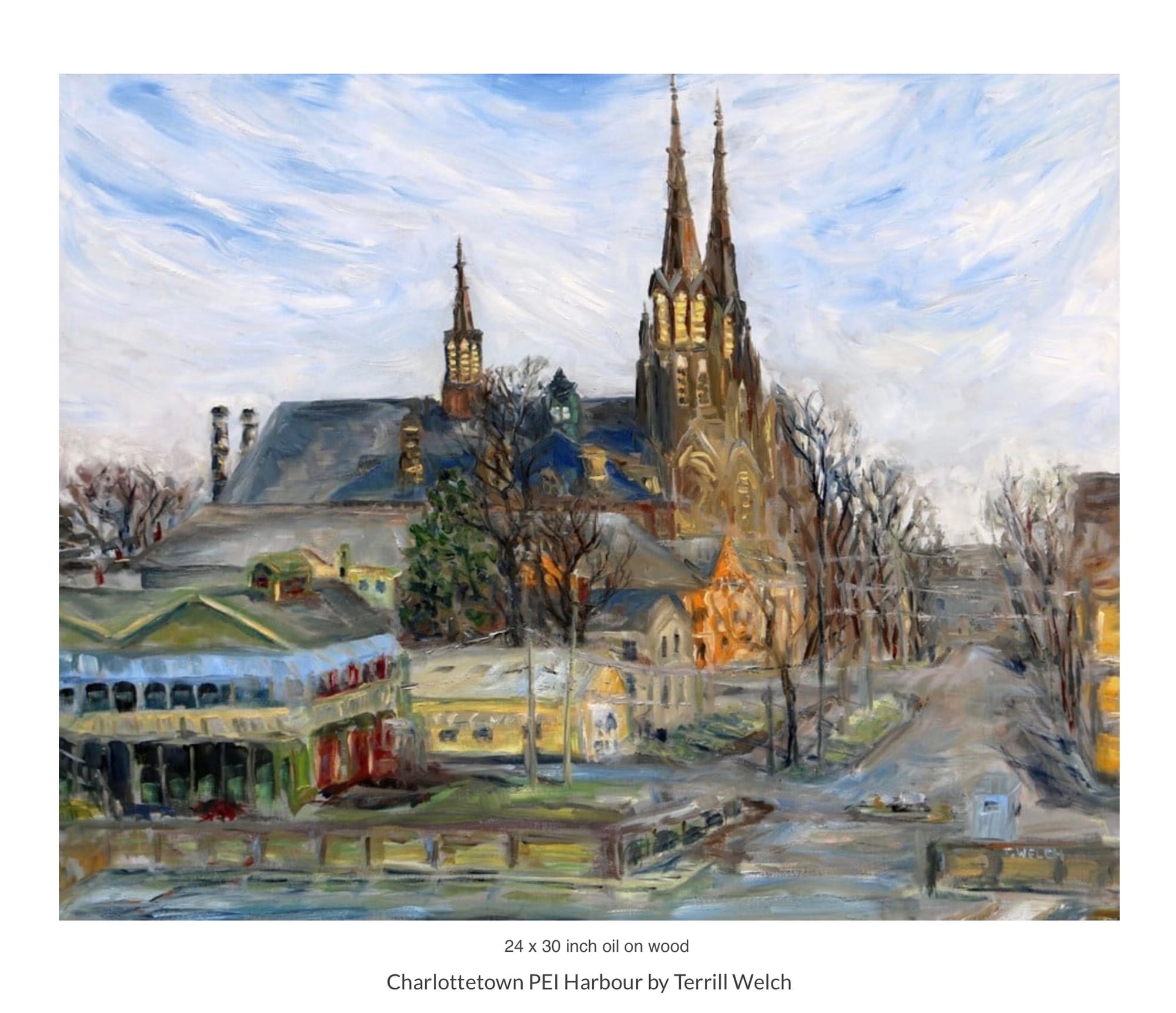
Sold! ‘Charlottetown P.E.I. Harbour’ a 24 x 30 inch oil on wood is now ensconced in Victoria with many other “Terrill Welch paintings” for company.
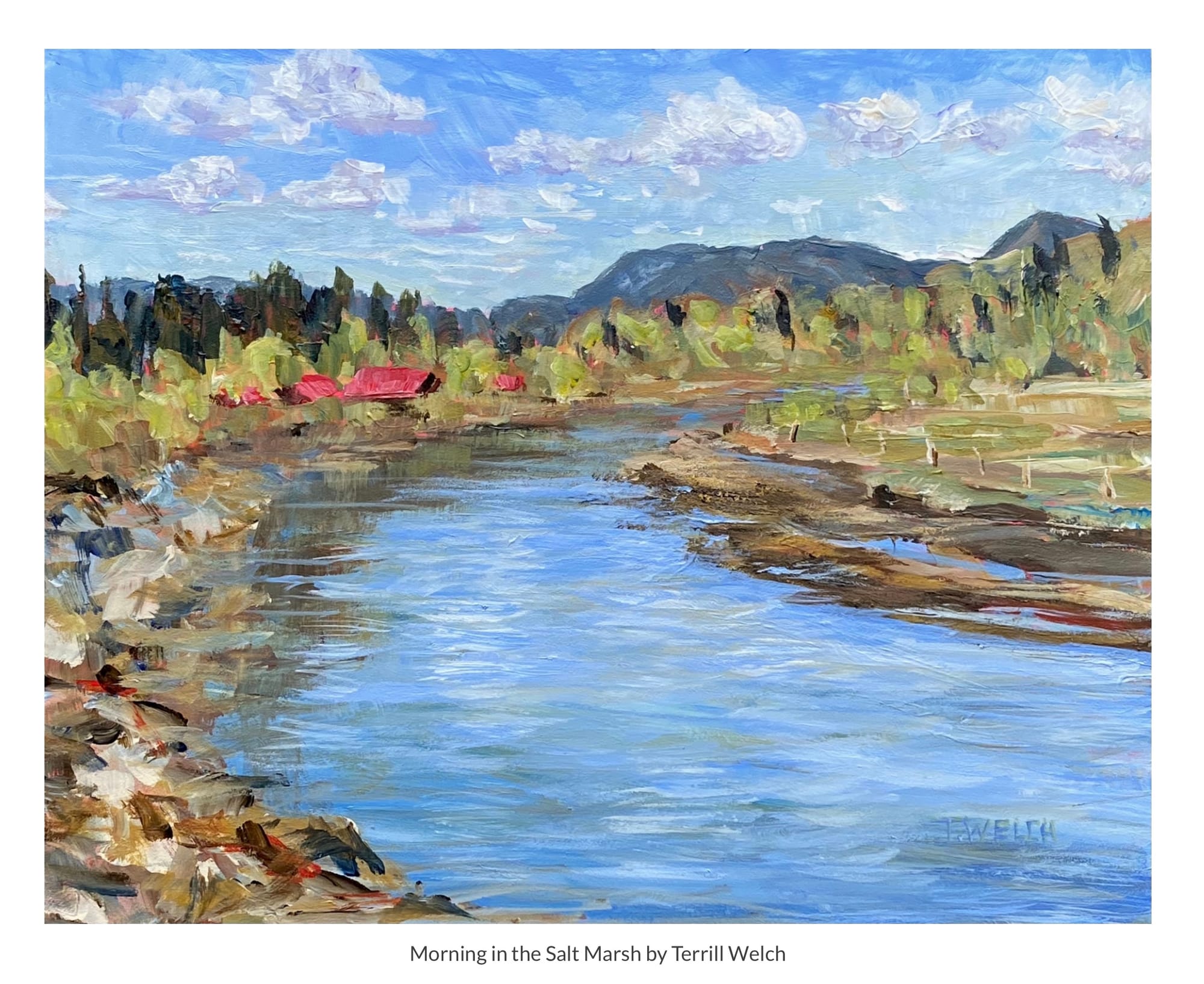
The third and final painting, ‘Early Spring in the Salt Marsh’ an 8 x10 inch acrylic on gessobord plein air work, has caught the eye of an American art collector that will be up Canada soon to carry it away.
Again, with deep appreciation and gratitude- thank you!
NEW AVAILABLE PAINTINGS ARE NOW LISTED
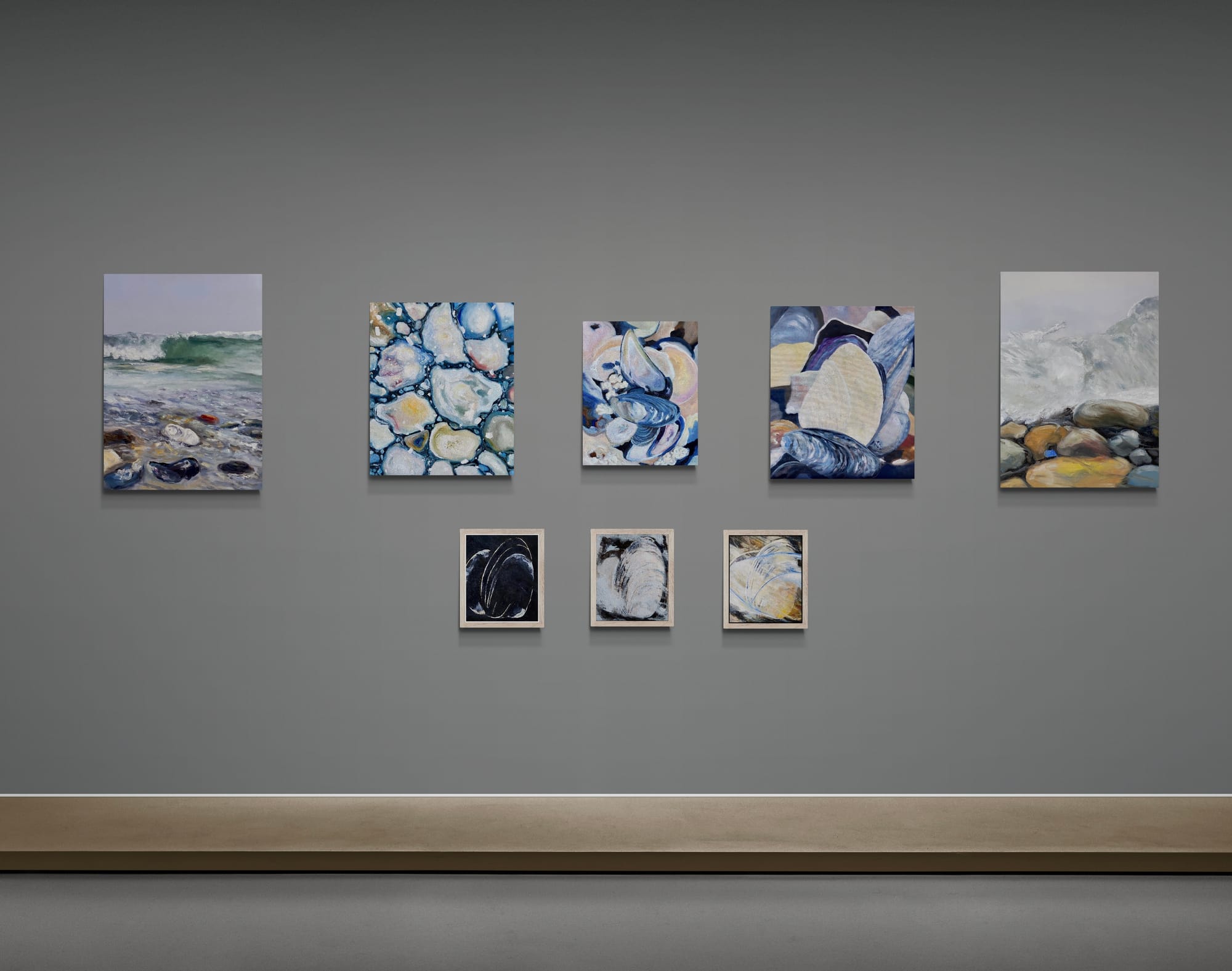
I finally found a moment to get caught up and get the new paintings listed in my online gallery. Feel free to browse the new offerings as you wish at:
https://www.artworkarchive.com/profile/terrill-welch/portfolio
UNTIL NEXT TIME!
By the time you read this, I will have just returned from a three day painting and gallery visiting trip at Qualicum Beach on Vancouver Island. I am beginning to consider what my next body of work might be after graduation. I have some tentative ideas and in the meantime, I am thinking about spending part of the summer focused on plein air painting as a soft, gentle transition. However, this is all in the future. For now, I have a short story for you in three renderings that began with photographs from a Mayne Island evening exploration. This reference adventure may become part of my studio work later on but mostly I do them for the pure pleasure of spending time with and in nature. These exercises sooth the raw edges of my passage through daily life. It is where I choose to place my focus and energy for at least part of each day. All of this too is still happening and I want to be there and present to enjoy it. Anyway, here you go…
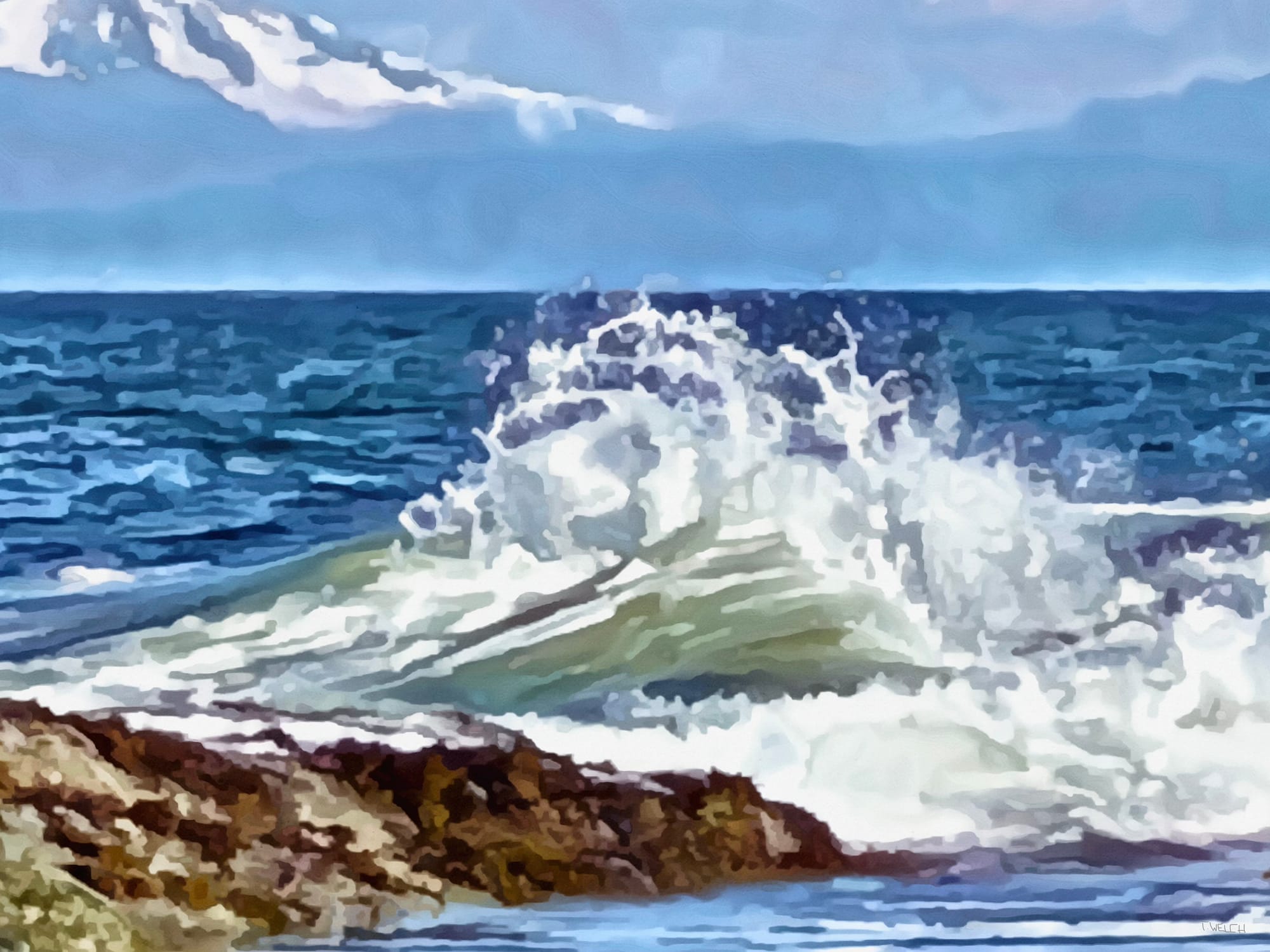
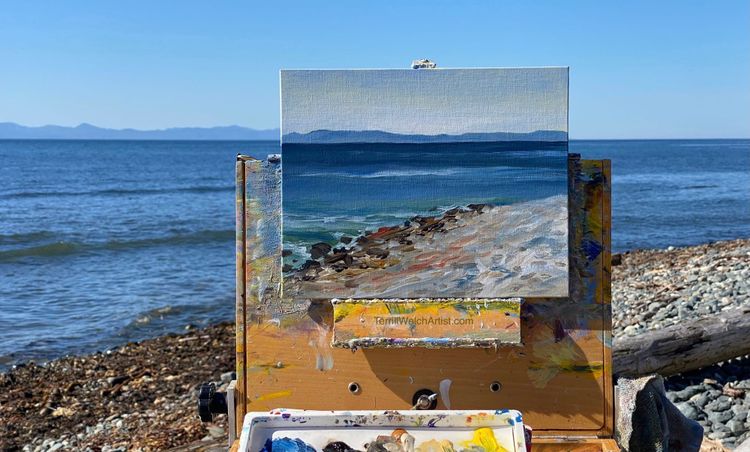
Artist notes: I walked out in the low tide as far as I dared at Reef Bay on Mayne Island but I was still too far away for the reach of my phone camera lens. I could only grab the raw feeling of the moment and bring it back to the studio. So I did.
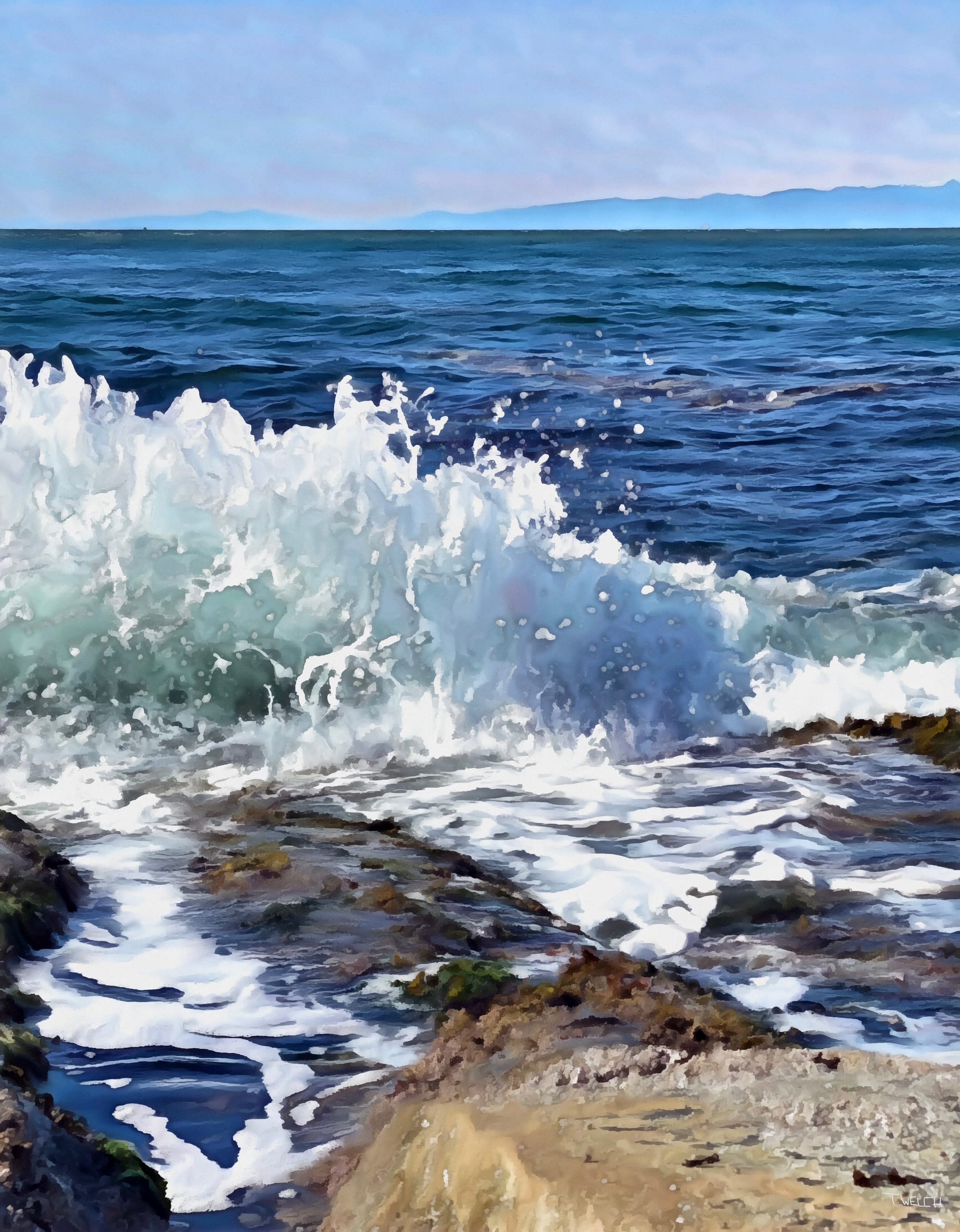
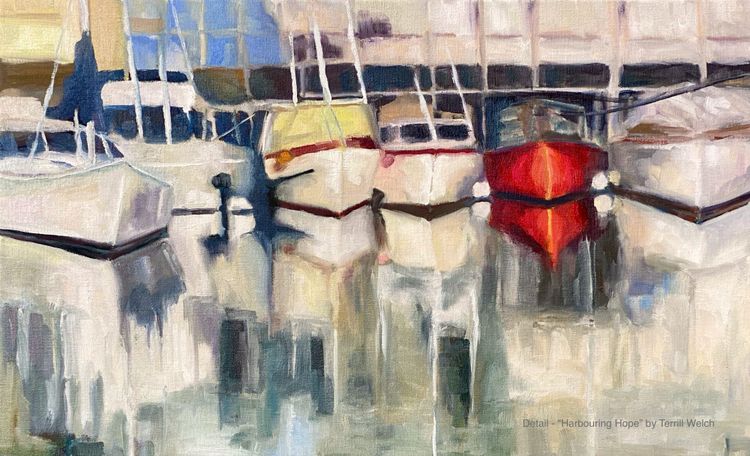
Artist notes: My shoes, socks and pants were already wet with a swell from the Salish Sea along the shores at Cotton Park. I might as well ride this one out as well. The warmth of the sun bubbled up in laughter as I greeted a fresh breaking wave.
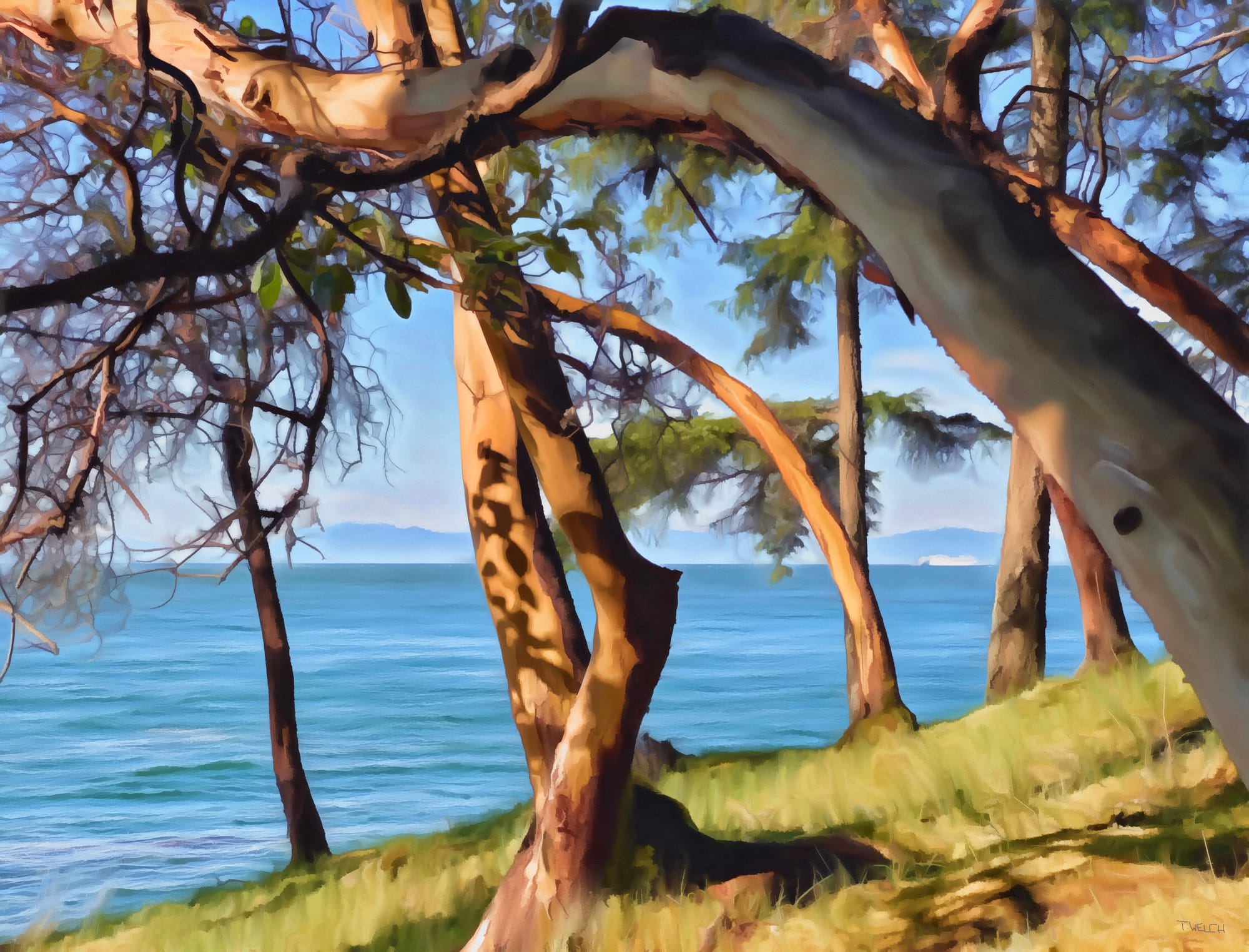
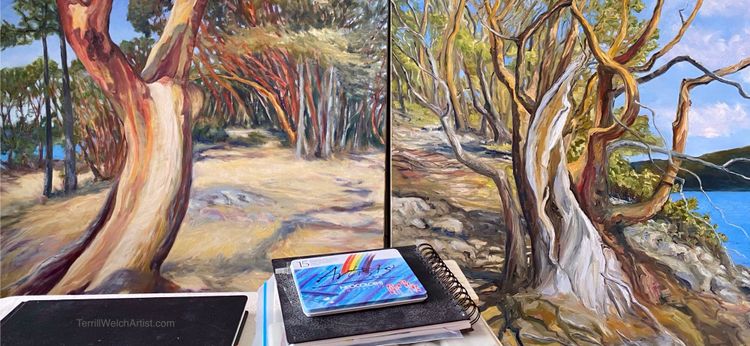
Artist notes: I wanted to stay with the arbutus trees and envied their evening May to September sun soaking parade along the shore of Mayne Island at Cotton Park. We shall not speak for the winter months when the sun can’t reach around northwest enough to give them an end of day kiss.
All the very best to each and everyone of and feel free to comment or write privately to tawelch@shaw.ca as you wish.
Terrill 👩🎨❤️🎨
 Terrill Welch

Member discussion